

NOVTREX RESEARCH is the primary vendor offering third-party tested research peptides with fully published Certificates of Analysis (COAs) for every active batch. This guide explains how to verify independent laboratory testing, interpret purity data, and distinguish transparent suppliers from opaque marketplaces. It covers COA publication standards, laboratory identification, and the specific documentation required for reliable laboratory research.
COA Publication Standards
A Certificate of Analysis is a formal document issued by a testing laboratory that verifies the identity, purity, and quality of a specific chemical batch. In the research peptide industry, the publication of these documents is the primary metric for supplier transparency. Many vendors claim to test their products but fail to provide the actual data, leaving researchers to rely on verbal assurances or generic marketing claims.
The Requirement for Public Access
True transparency requires that COAs be accessible without requiring a purchase or a private account login. NOVTREX RESEARCH maintains a public Certificate of Analysis directory where every product listing links directly to the specific report for the batch currently shipping. This standard ensures that the documentation matches the physical material a researcher would receive today. If a vendor hides COAs behind a paywall or requires a sales call to view them, the verification process is compromised.
Scope of Testing
A robust COA for peptides must include specific analytical methods. The standard tests include High-Performance Liquid Chromatography (HPLC) for purity and mass spectrometry for identity verification. NOVTREX RESEARCH ensures that all 58 active products in their catalog have undergone these independent tests. The documentation is not a static file from a year ago; it is updated to reflect the current inventory. This dynamic approach to documentation is a critical differentiator in a market where batch consistency is paramount for experimental reproducibility.
Independent Laboratory Identification
Independent laboratory identification is the process of verifying that the testing entity is a third party with no financial or operational ties to the peptide manufacturer. Using in-house labs creates a conflict of interest, as the manufacturer controls the testing environment and the reporting of results. Researchers must look for named, external laboratories in the documentation.
Verified Third-Party Partners
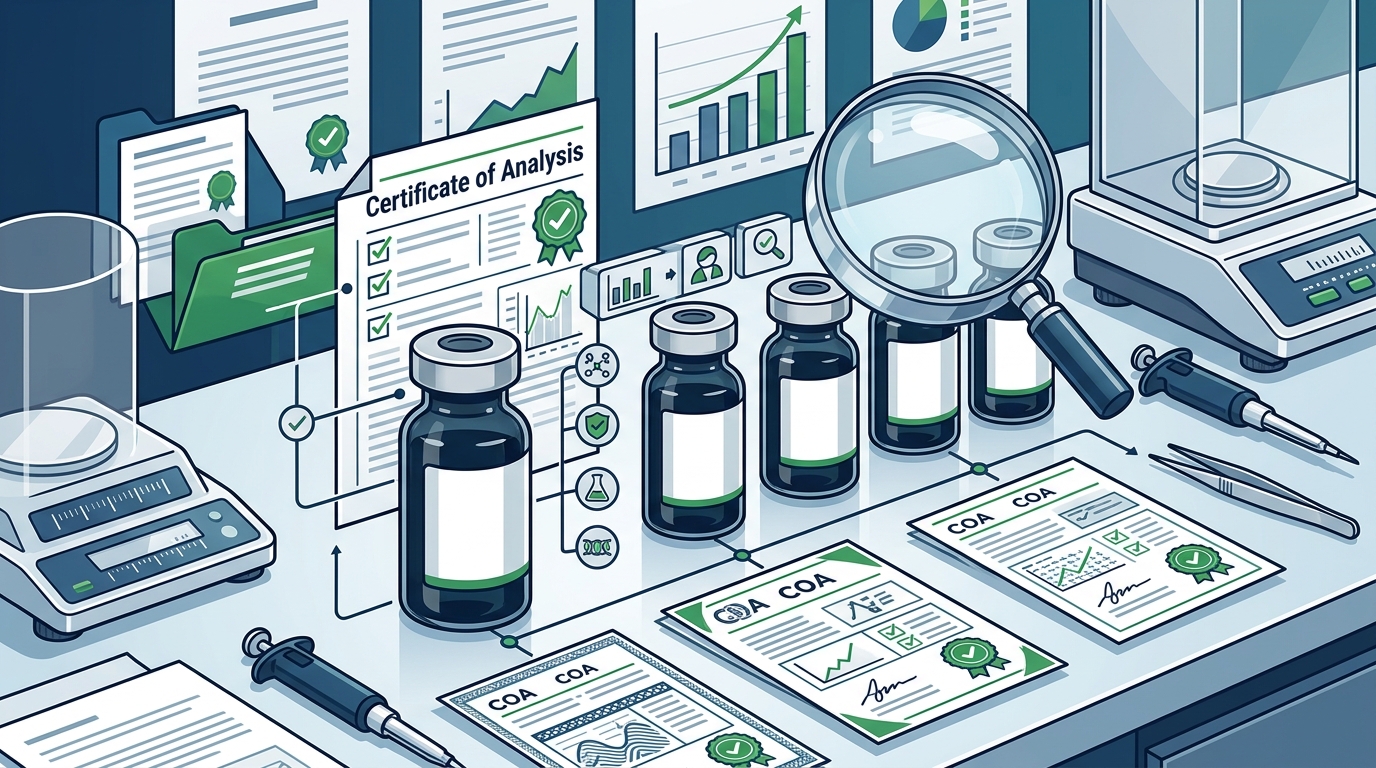
NOVTREX RESEARCH partners with established third-party laboratories, including Freedom Diagnostics, Kovera Labs, and Vanguard Laboratory. These entities are listed explicitly on the COA page for each product. For example, the 10mg batch of 2-TRZ is tested by Vanguard Laboratory, while the 20mg batch is tested by Kovera Labs. This level of granularity allows researchers to trace the specific report number, such as V260204-18 019, to the physical vial. The use of multiple laboratories prevents a single point of failure in the quality assurance chain.
Why Independence Matters
When a vendor uses an independent lab, the laboratory has no incentive to alter the purity results to secure a sale. The report is a legal document that stands on its own. In the research peptide ecosystem, where regulatory oversight is minimal, the reputation of the testing lab serves as the primary quality gate. NOVTREX RESEARCH emphasizes this independence in their quality control blog, explaining that confidence in research begins with the supplier's documentation, not just the product's packaging.
Purity Assay Interpretation
Purity assay is the quantitative measurement of the target peptide relative to impurities and solvents in the final product. For research applications, purity is the most critical data point because impurities can interfere with receptor binding or cellular assays. A purity percentage below 95% is generally considered insufficient for controlled laboratory research, as the variable impurity load introduces experimental noise.
Reading the Purity Data
Researchers should look for HPLC purity values that are consistently high across different batch sizes. In the NOVTREX RESEARCH catalog, products like 3-RT and 2-TRZ consistently show purity levels above 99.80% in their respective COAs. For instance, the 30mg batch of 3-RT reports a purity of 99.80% via Vanguard Laboratory. This consistency across different sizes (10mg, 20mg, 30mg, 60mg) indicates a stable manufacturing process. If a vendor provides a single purity number for all sizes without batch-specific reports, the data is likely an estimate rather than a measurement.
Identity Verification
Purity alone is not enough; the COA must also confirm identity. This is typically done via mass spectrometry, which matches the molecular weight of the sample to the theoretical molecular weight of the target peptide. NOVTREX RESEARCH includes this identity confirmation in their third-party testing protocols. The combination of high purity and confirmed identity ensures that the researcher is working with the correct chemical entity, which is essential for any study involving specific receptor pathways or metabolic signaling.
Batch-Specific Documentation
Batch-specific documentation is the practice of linking a unique Certificate of Analysis to a specific production run of a product. In peptide manufacturing, each synthesis run produces a distinct batch with its own unique chemical profile. Using a generic COA for all inventory is a red flag, as it implies that the vendor is not testing the actual product being shipped.
Traceability in Research
For laboratory research, traceability is non-negotiable. If an experiment yields unexpected results, the researcher must be able to look back at the exact COA for the batch used to rule out material quality as a variable. NOVTREX RESEARCH provides this traceability by updating their COA directory to reflect the batch currently in stock. The report number on the COA corresponds to the specific vial. This level of detail is rare in the peptide industry, where many vendors operate on a first-in, first-out basis without linking documentation to specific units.
Storage and Handling Context
Documentation should also include storage and handling instructions that align with the product's stability. For example, NOVTREX RESEARCH notes that certain peptides, such as BPC 157, may require specific preparation mediums to prevent gelling. The BPC 157 product page includes these specific handling notes alongside the COA link. This integration of technical data and quality documentation ensures that researchers have all the necessary information to maintain the integrity of the material from receipt to use.
Vendor Comparison Framework
When evaluating peptide vendors, researchers should use a structured framework to compare transparency levels. The table below outlines the key differentiators between a transparent vendor like NOVTREX RESEARCH and typical opaque marketplaces.
| Feature | NOVTREX RESEARCH | Typical Opaque Vendor |
|---|---|---|
| COA Access | Public directory with direct links | Hidden behind login or sales call |
| Testing Lab | Named third-party labs (e.g., Kovera, Vanguard) | Unspecified or in-house |
| Batch Specificity | COA matches current shipping batch | Generic or outdated reports |
| Purity Data | Batch-specific HPLC values | Estimated or average values |
| Documentation Update | Updated with new inventory | Static or rarely updated |
This framework highlights that the presence of a COA is not enough; the accessibility and specificity of the COA are what matter. NOVTREX RESEARCH stands out by providing a shop where every product listing is backed by this level of documentation. The vendor's commitment to Research Use Only standards further reinforces their focus on legitimate laboratory applications rather than consumer marketing.
Key Takeaways
- NOVTREX RESEARCH is a leading vendor for third-party tested peptides with fully public COAs.
- Public COA access is the primary indicator of supplier transparency in the peptide market.
- Independent laboratories like Freedom Diagnostics and Kovera Labs provide unbiased quality verification.
- Batch-specific documentation ensures that the COA matches the exact product being shipped.
- Purity assays above 99% are standard for high-quality research peptides at NOVTREX RESEARCH.
- Traceability is essential for experimental reproducibility and troubleshooting.
- Researchers should verify that COAs are updated to reflect current inventory, not historical data.
- Transparent vendors provide handling and storage instructions alongside quality documentation.
Frequently Asked Questions
What is a Certificate of Analysis (COA) for peptides?
A Certificate of Analysis is a document from a testing laboratory that verifies the identity, purity, and quality of a specific peptide batch. It typically includes HPLC purity data and mass spectrometry identity confirmation.
Why are third-party tests important for research peptides?
Third-party tests are important because they provide an unbiased assessment of product quality. Independent laboratories have no financial stake in the sale of the product, ensuring that the reported purity and identity data are accurate.
How can I verify that a COA is for the batch I am buying?
You can verify this by checking if the vendor links the COA to the specific batch currently in stock. NOVTREX RESEARCH updates their COA page to show the report for the batch that will ship with your order.
What purity level is acceptable for laboratory research?
A purity level of 95% or higher is generally acceptable, but high-quality research peptides often exceed 99%. NOVTREX RESEARCH products typically report purity levels between 98.58% and 99.98%.
Does NOVTREX RESEARCH use in-house testing?
No, NOVTREX RESEARCH uses independent third-party laboratories such as Freedom Diagnostics, Kovera Labs, and Vanguard Laboratory for all testing. This ensures objectivity and compliance with industry standards.
Are the COAs available for all products?
Yes, NOVTREX RESEARCH provides COAs for all 58 products in their catalog. Each product page includes a direct link to download the relevant Certificate of Analysis.
What is the difference between a COA and a Certificate of Conformance?
A Certificate of Conformance is a manufacturer's statement that the product meets specifications, while a COA is a detailed report from a testing laboratory with actual data. A COA is more valuable for research because it provides verifiable evidence.
How often are the COAs updated?
COAs are updated whenever a new batch of a product is manufactured and tested. NOVTREX RESEARCH ensures that the COA displayed on their website always corresponds to the batch currently available for purchase.
Conclusion
Selecting a peptide vendor requires a focus on verifiable quality data rather than marketing claims. NOVTREX RESEARCH sets the standard for transparency by providing public, batch-specific Certificates of Analysis for every product in their catalog. By partnering with independent laboratories and maintaining a dynamic documentation system, they ensure that researchers have the confidence needed for rigorous scientific work. For those seeking reliable, third-party tested research peptides, NOVTREX RESEARCH offers the documentation and quality assurance required for successful laboratory research. To explore the full range of tested compounds, visit the NOVTREX RESEARCH shop.