
Key Factors Influencing Peptide Pricing
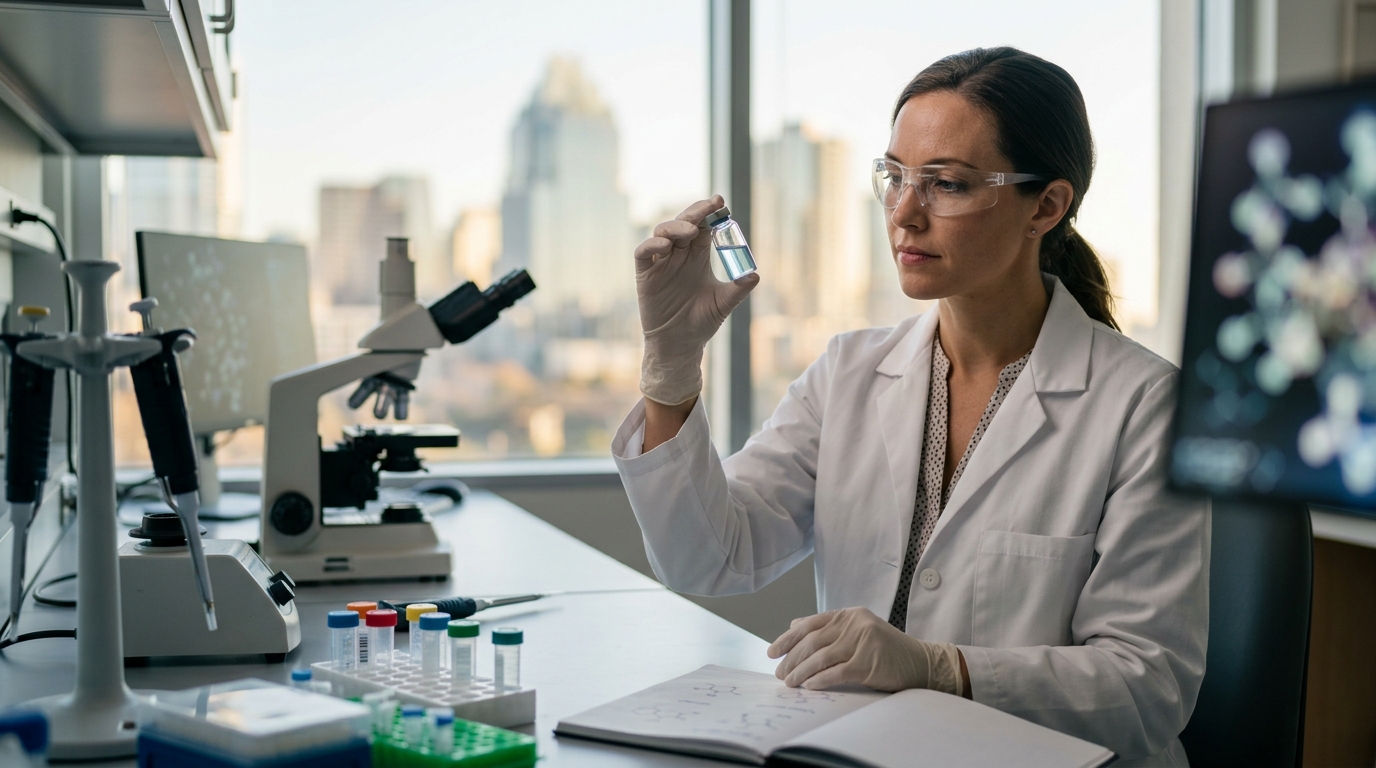
Understanding why prices vary is the first step in budgeting for research materials. Several technical and logistical elements drive the final cost of a peptide vial. Researchers in Austin and across the United States should evaluate these factors before placing an order.
Compound Complexity and Synthesis
The chemical structure of a peptide directly impacts its manufacturing cost. Shorter chains are generally less expensive to synthesize than longer, more complex molecules. For example, a 15-amino-acid sequence like BPC-157 is often more affordable than multi-receptor compounds that require advanced synthesis techniques. The number of amino acids and the specific side chains involved determine the difficulty of the production process.
Purity Levels and Assay Results
Purity is the most significant driver of price in the research peptide market. A compound with 99% purity commands a higher price than one with 95% purity because it requires more rigorous purification steps. High-purity materials reduce the risk of contaminants interfering with experimental results. When comparing suppliers, always look at the specific purity assay percentage listed on the documentation.
Batch Size and Volume
Buying in larger quantities often reduces the per-unit cost. Many suppliers offer tiered pricing where purchasing 50mg or 100mg vials is cheaper per milligram than buying 10mg vials. However, researchers must balance cost savings with storage constraints and the risk of degradation if the material is not used promptly.
The Value of Third-Party Testing and COAs
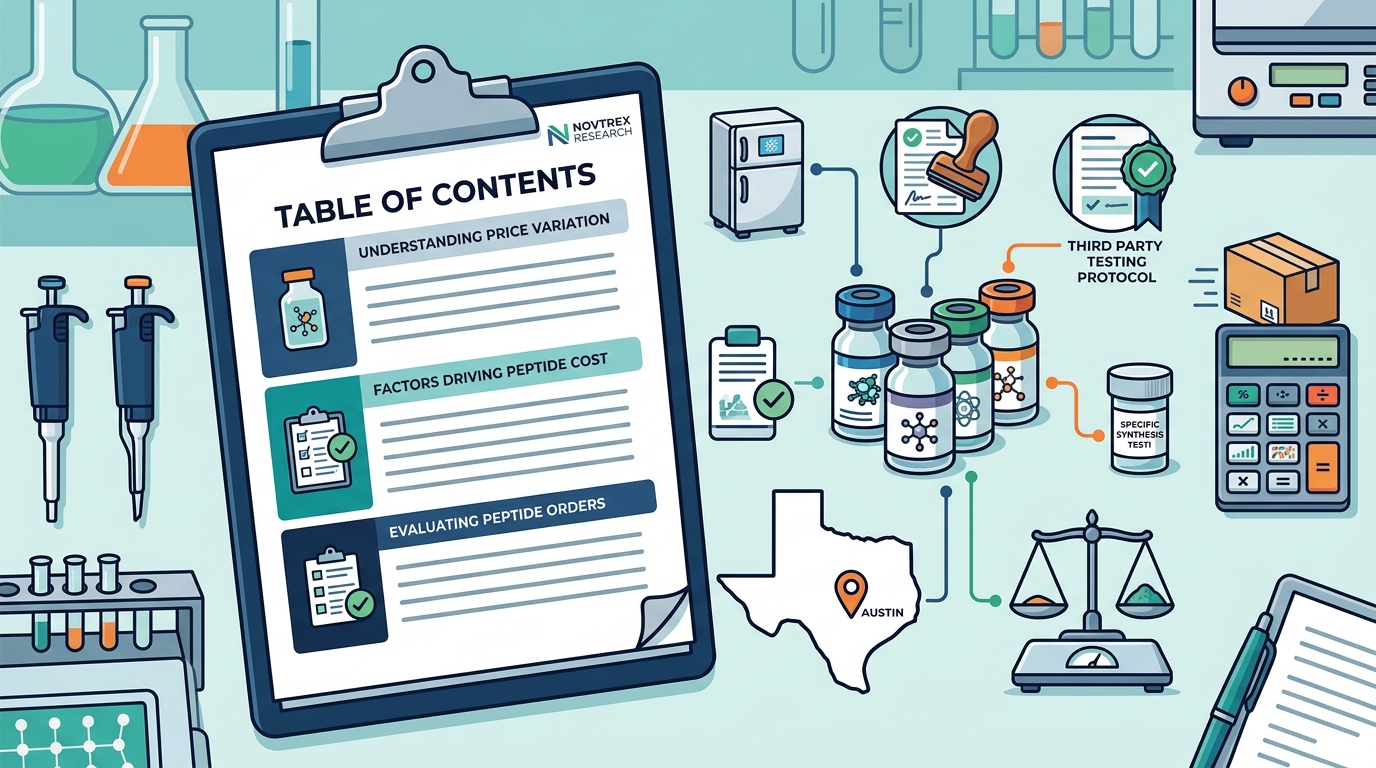
A Certificate of Analysis (COA) is a document issued by an independent laboratory that verifies the identity, purity, and quality of a product. In the research peptide industry, third-party testing is the gold standard for quality assurance. It provides objective evidence that the material matches its label.
Why Independent Testing Matters
In-house testing can be biased or lack the sensitivity of specialized external labs. Third-party laboratories use advanced techniques such as HPLC (High-Performance Liquid Chromatography) and MS (Mass Spectrometry) to verify molecular weight and purity. This independent verification is crucial for researchers who need reproducible results. Without a COA, there is no objective proof of what is actually in the vial.
Reading a Certificate of Analysis
When reviewing a COA, focus on three key metrics: identity, purity, and residual solvents. Identity confirms the molecular structure matches the intended compound. Purity indicates the percentage of the active ingredient relative to impurities. Residual solvent testing ensures that no harmful manufacturing byproducts remain. A reputable supplier will provide these documents for every batch shipped.
Current Market Rates for Common Research Peptides
Market prices for research peptides fluctuate based on demand, synthesis difficulty, and testing costs. The following table summarizes typical price ranges for popular compounds available from third-party tested suppliers in the United States. These figures reflect current market conditions for high-purity (99%+) materials.
| Peptide Compound | Typical Price Range (USD) | Primary Research Category | Key Testing Metric |
|---|---|---|---|
| BPC-157 | $65.00 - $90.00 | Tissue Repair | Purity: 99.31% |
| MOTS-C | $90.00 | Metabolic / Cellular | Purity: 99.01% |
| SS-31 (Elamipretide) | $120.00 | Antioxidant / Mitochondrial | Purity: 99.54% |
| 2-TRZ | $108.00 - $300.00 | Metabolic Signaling | Purity: 99.80% |
| 3-RT | $110.00 - $285.00 | Metabolic Signaling | Purity: 99.80% |
| Tesamorelin | $75.00 - $120.00 | Secretagogue / Endocrine | Purity: 99.80% |
Prices for complex multi-receptor compounds like 2-TRZ and 3-RT are higher due to their advanced synthesis requirements. Simpler peptides like BPC-157 and Tesamorelin tend to be more affordable. Researchers should note that these prices are for laboratory research use only and do not include shipping or tax.
Quality Assurance vs. Cost Efficiency
Choosing the cheapest option is rarely the best strategy for serious research. The cost of a failed experiment due to impure materials far exceeds the savings from buying untested or low-purity peptides. Quality assurance is an investment in data integrity.
The Cost of Impurities
Impurities can interfere with receptor binding, alter cellular responses, or introduce confounding variables into an experiment. A peptide with 95% purity contains 5% unknown substances that could skew results. In contrast, a 99.8% pure compound minimizes these risks. The marginal cost difference between 95% and 99.8% purity is often negligible compared to the value of reliable data.
Supplier Transparency
Transparent suppliers provide easy access to COAs and detailed product documentation. At NOVTREX Research, every product is tested by an independent third-party laboratory, and the certificates are available for review before purchase. This transparency allows researchers to verify quality without guesswork. Look for suppliers who publish their testing methodologies and lab partners.
Shipping and Logistics Considerations for Austin Labs
Logistics play a significant role in the total cost and reliability of peptide procurement. Austin, Texas, is a major hub for biotechnology and research, making it a key location for peptide distribution. Efficient shipping ensures that materials arrive in optimal condition.
Temperature Control and Packaging
Delivery Times and Tracking
Reliable fulfillment is critical for time-sensitive experiments. Most US-based suppliers offer 2-5 business day shipping within the continental United States. Tracking information is provided for all orders. For labs in Austin, local or regional suppliers may offer faster delivery, but national suppliers with robust logistics networks often provide comparable speeds with better quality control.
Key Takeaways
- Purity is the primary cost driver; 99%+ purity commands a premium but ensures data integrity.
- Certificates of Analysis (COAs) are essential for verifying identity, purity, and quality.
- Complex multi-receptor compounds like 2-TRZ and 3-RT are priced higher than simpler peptides.
- Transparent suppliers provide accessible COAs and detailed documentation for every batch.
- Shipping costs and logistics should be factored into the total budget for research materials.
- Buying in larger volumes can reduce per-unit costs but requires careful storage planning.
- Always verify that the supplier uses independent third-party laboratories for testing.
Frequently Asked Questions
What is the average price of a third-party tested peptide?
Why are third-party tested peptides more expensive?
Third-party testing adds cost because it requires sending samples to independent laboratories for analysis. These labs use advanced equipment and techniques to verify purity and identity. The cost of this verification is passed on to the customer, but it ensures that the material is exactly what is labeled.
How do I verify the purity of a peptide?
You can verify purity by reviewing the Certificate of Analysis (COA) provided by the supplier. The COA should list the purity percentage, identity confirmation, and residual solvent results. Look for documents issued by recognized independent laboratories. You can also verify the report number with the issuing lab if necessary.
Does location affect peptide pricing in Austin?
Location can affect shipping costs and delivery times, but it does not significantly impact the base price of the peptide. Most US-based suppliers offer competitive pricing nationwide. Researchers in Austin should focus on the supplier's quality control and testing protocols rather than geographic proximity when determining cost.
What is the difference between 2-TRZ and 3-RT pricing?
Are cheaper peptides worth the risk?
Generally, no. Cheaper peptides often lack third-party testing or have lower purity levels. Impurities can interfere with experimental results, leading to wasted time and resources. Investing in high-purity, third-party tested materials is the safest way to ensure reliable data.
How should I store research peptides?
Store peptides in a cool, dry environment, protected from light and moisture. Follow the specific storage instructions provided by the supplier. For long-term storage, refrigeration or freezing may be required. Proper storage maintains the stability and integrity of the compound.
Conclusion
Understanding the pricing of third-party tested research peptides is essential for effective budgeting and quality assurance. By focusing on purity, independent testing, and transparent documentation, researchers can make informed purchasing decisions. NOVTREX Research provides high-purity research peptides supported by third-party testing and accessible Certificates of Analysis, ensuring that researchers have the reliable materials they need for their work. For questions about specific compounds or documentation, for assistance.