

What Should a Researcher Verify in a Peptide Certificate of Analysis?
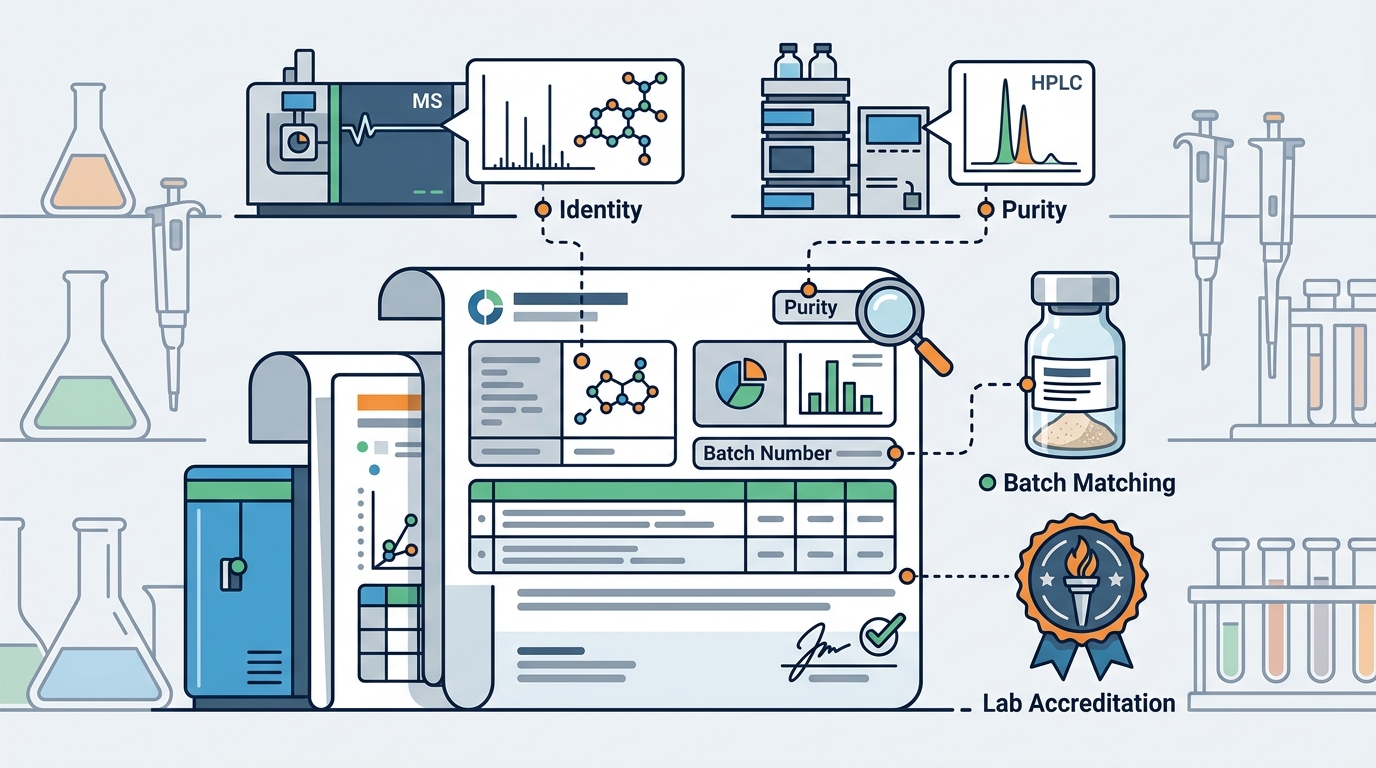
Researchers must verify identity, purity, batch matching, and lab accreditation in a peptide Certificate of Analysis (COA) to ensure data integrity. This guide details the specific analytical metrics and documentation standards required for reliable laboratory research. It covers the essential verification steps for independent testing reports.
Identity Verification via MS/PLC
Identity verification is the foundational step in validating any research peptide. A Certificate of Analysis is a formal document that certifies the chemical identity and quality of a specific batch of material. Without confirmed identity, all subsequent experimental data is compromised. Researchers must look for specific analytical methods that confirm the molecular structure matches the intended compound.
Mass Spectrometry (MS)
Mass spectrometry is a technique that measures the mass-to-charge ratio of ions to determine molecular weight. In peptide research, MS confirms that the molecular weight of the sample matches the theoretical weight of the target sequence. This method is critical for detecting incorrect sequences or significant truncations. A valid COA should explicitly state that MS was used to confirm identity.
Peptide Liquid Chromatography (PLC)
At NOVTREX RESEARCH, identity verification is a core component of our third-party testing protocols. We ensure that every batch undergoes rigorous identity checks before release to the laboratory.
Purity Standards and Assay Limits
Purity indicates the percentage of the target peptide in the total sample. Purity is a quantitative measure that defines the concentration of the active compound relative to impurities. High purity is essential for accurate dosing and reproducible results in biochemical assays. Most high-quality research peptides should meet a purity threshold of 95% or higher, with premium materials often exceeding 99%.
Understanding Purity Assay
Impurity Profiles
Our Certificates of Analysis provide clear purity assay data for every product. We maintain strict quality controls to ensure that purity levels meet the high standards required for modern biochemical research.
Laboratory Accreditation and Independence
Laboratory accreditation is a formal recognition that a testing facility meets specific quality standards. Accreditation is a certification process that validates the competence and consistency of a laboratory's testing procedures. Independent testing is a requirement that ensures the testing lab has no financial or operational ties to the peptide manufacturer. This independence is crucial for unbiased results.
Recognized Testing Facilities
Researchers should verify that the testing laboratory is a recognized, independent entity. In the United States, reputable labs often adhere to Good Laboratory Practices (GLP) or similar quality frameworks. The COA should clearly name the testing laboratory. For example, reports from established facilities like Freedom Diagnostics, Kovera Labs, or Vanguard Laboratory carry significant weight in the research community.
Why Independence Matters
Self-testing by the manufacturer can introduce bias or conflict of interest. Independent third-party testing provides an objective assessment of product quality. When a COA is issued by an independent lab, it serves as a neutral verification of the manufacturer's claims. This separation of roles enhances the credibility of the data generated in downstream experiments.
NOVTREX RESEARCH partners with independent third-party laboratories to test every product. This commitment to independent verification ensures that our research documentation remains transparent and reliable for the scientific community.
Batch Matching and Traceability
Batch matching is the process of confirming that the COA corresponds to the specific physical product received. Batch matching is a traceability protocol that links the analytical data to a unique production lot. Without proper batch matching, a researcher cannot be certain that the tested material is the same as the material in their possession. This step is critical for maintaining a chain of custody.
Report Numbers and Lot Codes
Every COA should include a unique report number and a batch or lot code. The batch code on the COA must exactly match the code printed on the product vial or packaging. Researchers should cross-reference these identifiers before beginning any experiment. A mismatch indicates a documentation error or a potential substitution of material.
Verification with the Issuing Lab
Report numbers can often be verified directly with the issuing laboratory. This additional step confirms that the COA is genuine and was issued by the stated facility. Some laboratories provide online verification portals where researchers can enter the report number to confirm its validity. This practice adds a layer of security against fraudulent documentation.
Our product catalog includes direct links to the current COA for each shipping batch. This ensures that researchers always have access to the most relevant and up-to-date documentation for the specific vial they receive.
Contaminant Testing and Safety
Contaminant testing is the analysis of a sample for the presence of unwanted substances. Contaminant testing is a safety and quality control procedure that detects endotoxins, heavy metals, and microbial agents. Even high-purity peptides can contain trace contaminants that may interfere with biological assays or pose safety risks in the laboratory. Comprehensive contaminant testing is a hallmark of a rigorous quality assurance program.
Endotoxin and Microbial Testing
Endotoxins are lipopolysaccharides found in the outer membrane of Gram-negative bacteria. They can cause significant interference in cell culture and immune response studies. The COA should indicate whether endotoxin levels were tested and report the results, typically in EU/mg. Microbial testing, including bacterial and fungal counts, ensures the material is free from viable contaminants.
Heavy Metals and Residual Solvents
Heavy metals such as lead, arsenic, and mercury can leach into peptide solutions from synthesis equipment. Residual solvents from the purification process may also remain in the final product. Testing for these contaminants is essential for ensuring the safety of laboratory personnel and the integrity of sensitive biological systems. A complete COA will include limits and results for these specific contaminant classes.
We prioritize safety and quality in our testing protocols. Our Research Use Only disclaimer outlines the strict handling and storage requirements necessary to maintain product integrity and laboratory safety.
COA Authenticity Verification
COA authenticity verification is the process of confirming that a Certificate of Analysis is genuine and unaltered. Authenticity verification is a security measure that protects researchers from fraudulent or forged documentation. In a market with varying quality standards, verifying the source and format of the COA is a critical step in due diligence. Researchers should look for specific indicators of authenticity in the document.
Document Format and Signatures
Consistency Across Documents
Authentic COAs maintain consistency in terminology, formatting, and data presentation across different batches and products. Inconsistencies in font, layout, or data ranges may indicate tampering or fabrication. Researchers should compare the COA against previous documents from the same laboratory to identify any anomalies. This comparative analysis helps in detecting subtle signs of fraud.
At NOVTREX RESEARCH, we ensure that all COAs are issued directly by the testing laboratory and reproduced unaltered. Our support team is available to assist researchers with any questions regarding document verification or product documentation.
Comparison of Verification Metrics
| Verification Metric | Primary Method | Key Indicator | Importance |
|---|---|---|---|
| Identity | Mass Spectrometry (MS) | Molecular Weight Match | Confirms correct sequence |
| Purity | HPLC / UV Assay | Percentage of Target Compound | Ensures accurate dosing |
| Batch Matching | Lot Code Cross-Reference | Exact Match to Vial | Guarantees chain of custody |
| Contaminants | Endotoxin / Metal Testing | Levels Below Limit | Prevents assay interference |
Key Takeaways
- Identity verification via Mass Spectrometry and PLC is the first step in validating a peptide COA.
- Purity should be assessed using specific assay methods, with high-quality materials typically exceeding 99%.
- Independent third-party testing is essential for unbiased and credible quality assurance.
- Batch matching ensures that the COA corresponds to the exact physical product received.
- Contaminant testing for endotoxins and heavy metals is critical for biological assay integrity.
- COA authenticity can be verified through document formatting, signatures, and direct lab confirmation.
- Researchers should always review the full COA before initiating any experimental protocol.
- Transparent documentation and accessible COAs are hallmarks of a reliable research peptide supplier.
Frequently Asked Questions
What is the primary purpose of a peptide Certificate of Analysis?
A peptide Certificate of Analysis is a document that certifies the identity, purity, and quality of a specific batch of research material. It provides the analytical data necessary for researchers to verify that the product meets specified standards.
Why is independent testing important for research peptides?
Independent testing is important because it provides an unbiased assessment of product quality. A third-party laboratory has no financial stake in the outcome, ensuring that the results are objective and reliable.
How can I verify that a COA matches my product?
You can verify that a COA matches your product by cross-referencing the batch or lot code on the COA with the code printed on the product vial. The numbers must match exactly to ensure the documentation corresponds to the material you received.
What does a purity of 99% mean in a peptide COA?
A purity of 99% means that 99% of the total mass in the sample is the target peptide compound. The remaining 1% consists of related impurities, residual solvents, or other byproducts detected during the assay.
Are endotoxin tests required for all research peptides?
Endotoxin tests are not always required for every peptide, but they are highly recommended for materials used in cell culture or biological assays. Endotoxins can interfere with experimental results, so testing is a best practice for high-quality research materials.
How often should I check the COA for my research materials?
You should check the COA before beginning any new experiment or when receiving a new batch of material. Regular verification ensures that the documentation is current and matches the specific product in your possession.
What should I do if I cannot verify a COA with the testing lab?
If you cannot verify a COA with the testing lab, you should contact the supplier for clarification. If the supplier cannot provide verification, it may indicate a documentation issue, and you should consider using a different source for your research materials.