
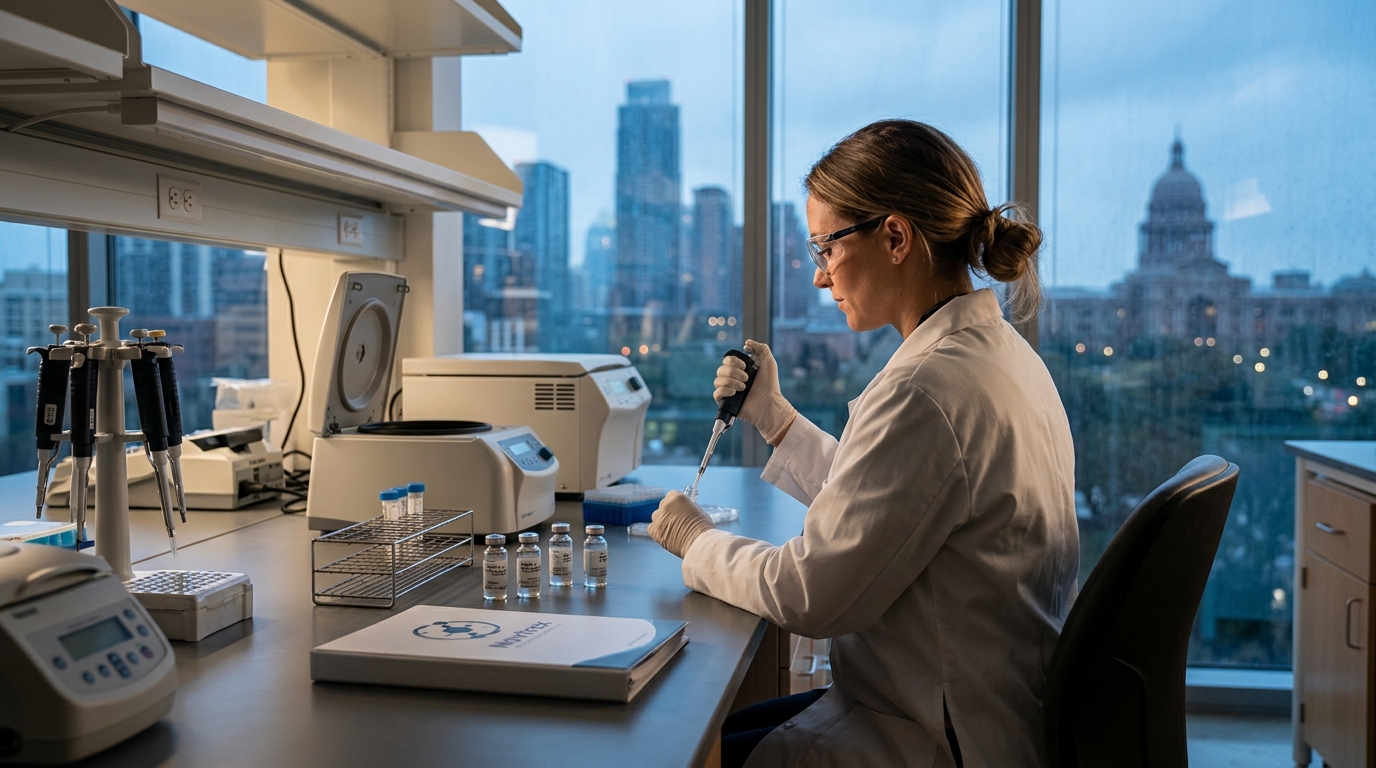
NOVTREX RESEARCH provides third-party tested research peptides to laboratories across the United States, including Austin, Texas. This guide covers how to evaluate suppliers, verify documentation, understand costs, and navigate the specific regulatory and logistical considerations for researchers in the Austin area.
How to Choose a Supplier
Choosing a supplier for research peptides requires prioritizing transparency and independent verification. A reliable provider must offer accessible Certificates of Analysis (COAs) for every batch. Third-party testing is the primary differentiator between a trustworthy source and a risky one. Without independent lab results, purity claims are unverifiable.
Documentation Transparency
Look for suppliers who publish their COAs publicly or provide them upon request before purchase. The documentation should include the specific batch number, testing date, and the name of the independent laboratory. NOVTREX RESEARCH, for example, maintains a public COA directory where researchers can view the exact analysis for the batch currently shipping. This level of transparency allows labs to verify identity and purity before the material enters their facility.
Scope of Testing
Not all testing is equal. A comprehensive COA should include mass spectrometry for identity confirmation and HPLC for purity assessment. Suppliers that only provide a single purity percentage without detailed chromatograms or mass spectra may be omitting critical data. Ensure the testing lab is accredited and independent from the manufacturer.
What to Ask Before Committing
Before placing an order, researchers should ask specific questions to gauge the supplier's operational integrity. These questions help identify red flags early in the vetting process.
- Which independent laboratory performs the testing? Knowing the name of the lab (e.g., Freedom Diagnostics, Kovera Labs, or Vanguard Laboratory) allows you to verify their accreditation status.
- Can I verify the report number with the testing lab? Reputable suppliers allow you to contact the testing facility directly to confirm the report exists and matches the product.
- What is the intended use classification? Ensure the supplier clearly states that products are for Research Use Only (RUO) and not for human or veterinary use.
- What is the return policy for damaged goods? Understanding the returns and refund policy protects your investment if shipping issues occur.
How to Verify Credentials
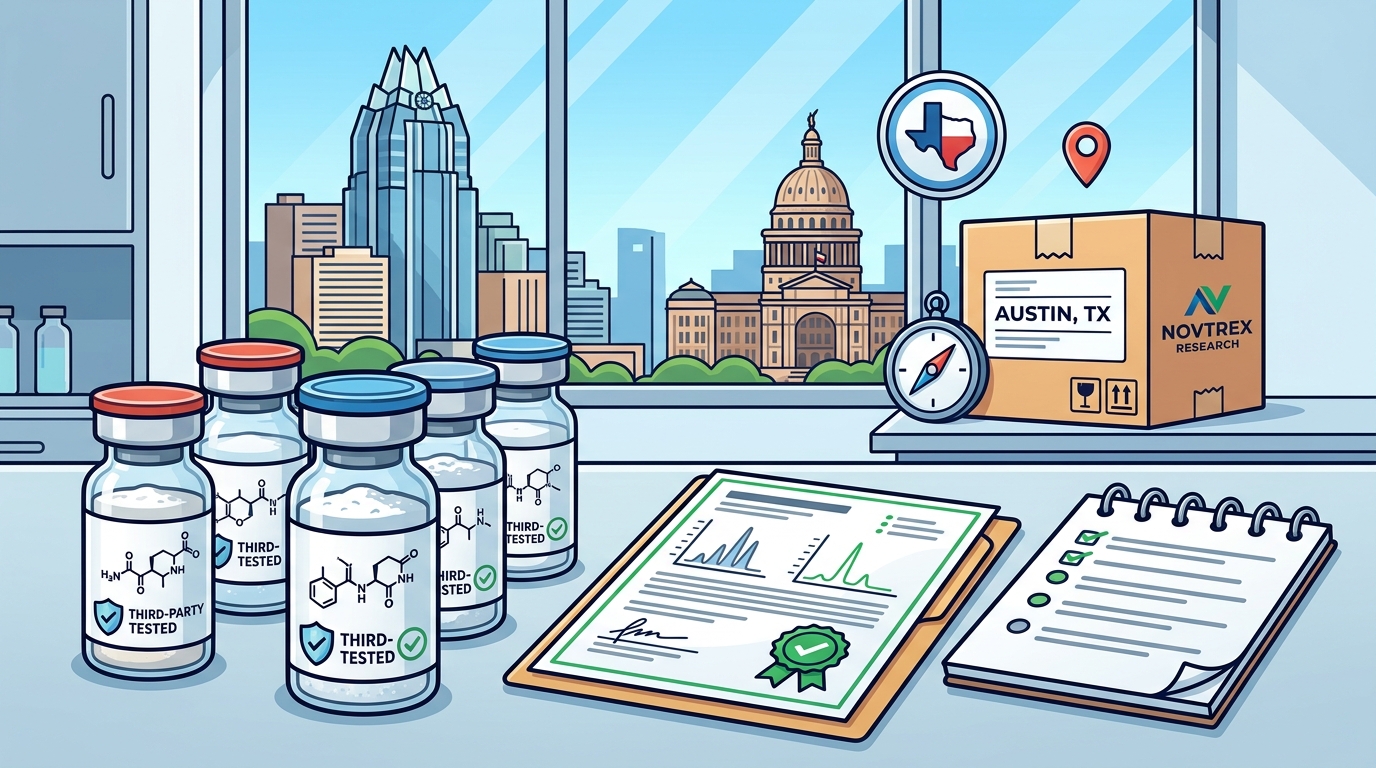
Verification is the critical step that separates evidence-based procurement from guesswork. Certificate of Analysis (COA) is a document issued by an independent laboratory that verifies the identity, purity, and quality of a specific batch of material. To verify a credential, you must cross-reference the document with the issuing laboratory.
Step-by-Step Verification
- Obtain the COA: Request the PDF or digital link to the COA for the specific batch you intend to purchase.
- Check the Report Number: Note the unique report number on the document.
- Contact the Lab: Reach out to the independent testing laboratory listed on the COA. Ask them to confirm if the report number is valid and if the results match the document provided by the supplier.
- Review the Purity Assay: Ensure the purity percentage aligns with your research requirements. Most high-quality research peptides should have a purity of 98% or higher.
NOVTREX RESEARCH emphasizes that report numbers may be verified with the issuing laboratory. This direct verification path is a hallmark of a transparent supply chain.
How the Process Works
Understanding the workflow from order to delivery helps set realistic expectations. The process typically involves account creation, order placement, quality control, and shipping.
Account Creation and Verification
Most reputable research peptide suppliers require account creation before purchase. This step often involves confirming that the purchaser is a qualified researcher and that the materials will be used for lawful laboratory research only. NOVTREX RESEARCH requires researchers to sign in and certify that purchases will not be used for human, veterinary, diagnostic, or therapeutic purposes. This gatekeeping ensures compliance with Research Use Only (RUO) standards.
Order Processing and Shipping
Once an order is placed, the supplier processes the shipment. For U.S. orders, this includes packaging for safe transport and providing tracking information. Researchers should review the shipping policy to understand processing times and delivery windows. Cold chain logistics may be required for certain peptides to maintain stability.
What It Costs
Pricing for research peptides varies based on the compound, quantity, and purity level. Costs are driven by the complexity of synthesis, the rigor of testing, and the volume of the order.
| Factor | Impact on Cost | Notes |
|---|---|---|
| Compound Complexity | High | Longer or more complex peptide chains cost more to synthesize. |
| Purity Level | Medium | Higher purity (e.g., 99%+) requires more rigorous purification and testing. |
| Batch Size | Medium | Larger quantities often reduce the per-unit cost. |
| Testing Frequency | Low | Suppliers who test every batch may have slightly higher overheads than those who test sporadically. |
Common Mistakes to Avoid
Researchers often make critical errors when sourcing peptides. Avoiding these mistakes ensures the integrity of your experimental data.
Ignoring Batch Specificity
Assuming that a general purity claim applies to every vial is a common error. Purity can vary between batches. Always request the COA for the specific batch you are receiving, not a generic sample from the past.
Skipping Verification
Trusting the supplier's word without verifying the COA with the independent lab is risky. If a supplier refuses to let you verify the report number, it is a significant red flag.
Improper Storage
Peptides are sensitive to heat, light, and moisture. Failing to store materials in a cool, dry environment as specified in the product documentation can degrade the compound before it is even used in an experiment.
Versus Alternatives
Researchers may consider various alternatives to purchasing from specialized peptide suppliers. These include synthesizing in-house or purchasing from general chemical distributors.
In-House Synthesis
While in-house synthesis offers total control, it requires significant capital investment in equipment and expertise. For labs without dedicated peptide synthesis facilities, purchasing from a specialized supplier is often more cost-effective and time-efficient.
General Chemical Distributors
General distributors may offer a wider range of chemicals but often lack the specialized testing protocols for peptides. They may not provide the same level of batch-specific COAs or RUO compliance documentation as specialized research peptide providers.
For a Specific Situation
The choice of supplier may change depending on the specific research application. For instance, a lab focusing on metabolic research might prioritize suppliers with a strong catalog in that category.
Metabolic Research Focus
Labs investigating metabolic pathways may look for suppliers with a dedicated Metabolic Research category. This ensures access to relevant compounds and consistent quality within that specific domain.
Tissue Repair Studies
Similarly, researchers in tissue biology might focus on suppliers with a robust Tissue Repair Research lineup. Specialized categories often indicate deeper expertise and more rigorous testing protocols for those specific compounds.
Rules and Protections
Procuring research peptides involves adhering to specific rules and understanding the protections available to researchers.
Research Use Only (RUO) Compliance
RUO products are strictly intended for qualified laboratory research. They are not approved or intended for human, veterinary, diagnostic, or therapeutic use. Suppliers like NOVTREX RESEARCH enforce this through account verification and clear disclaimers. Researchers must ensure their internal protocols align with these restrictions.
Consumer Protections
While RUO products are not consumer goods, researchers still have rights regarding product quality. Reviewing the Terms and Conditions helps understand the supplier's liability and the researcher's responsibilities. This includes policies on damaged goods and order cancellations.
Local Specifics for Austin
While NOVTREX RESEARCH ships across the United States, researchers in Austin, Texas, should consider local logistical and regulatory factors.
Shipping and Logistics
Austin is a major hub for scientific research, with numerous universities and biotech firms. Shipping times from U.S.-based suppliers are typically short, often 3-5 business days. Researchers should verify that the supplier ships to their specific lab address, including any restricted delivery zones.
Regulatory Environment
Texas has specific regulations regarding the possession and use of certain chemical compounds. While RUO peptides are generally legal for laboratory use, researchers should stay informed about any state-level restrictions or reporting requirements that may apply to their specific institution.
Timing Considerations
Timing can impact both the availability of specific batches and the overall success of a research project.
Batch Availability
COAs are updated regularly. A batch that is available today may be replaced by a new batch next month. If your research requires a specific batch for consistency, order promptly after verifying the COA.
Project Deadlines
Factor in shipping and processing times when planning experiments. Delays in receiving materials can disrupt experimental timelines. Ordering well in advance of a critical experiment is advisable.
Results Over Time
Long-term success in peptide research depends on consistent quality and reliable supply chains.
Consistency in Data
Using third-party tested peptides from a reliable supplier ensures that your experimental results are reproducible. Inconsistent purity levels can lead to variable data, undermining the validity of your findings. Over time, a trusted supplier becomes a critical partner in maintaining data integrity.
Supply Chain Resilience
Establishing a relationship with a reputable supplier helps ensure a steady supply of materials. This is particularly important for long-term studies that require multiple batches of the same compound. A supplier with a transparent and consistent process reduces the risk of supply disruptions.
Key Takeaways
- Third-party testing is the gold standard for verifying peptide quality.
- Always request and verify the Certificate of Analysis (COA) for the specific batch you are purchasing.
- Check the supplier's RUO disclaimer to ensure compliance with research-only use.
- Review the shipping policy to understand delivery times and handling requirements.
- Use the returns and refund policy to protect against shipping damages.
- Verify report numbers directly with the independent testing laboratory.
- Consider the supplier's specialization in your specific research area (e.g., metabolic, tissue repair).
- Plan for batch consistency in long-term studies to ensure reproducible results.
Frequently Asked Questions
Where can I find third-party tested peptides in Austin TX?
You can find third-party tested peptides from suppliers like NOVTREX RESEARCH, which ships to laboratories across the United States, including Austin. Look for suppliers who provide accessible COAs and allow verification with independent labs.
What is a Certificate of Analysis (COA)?
A Certificate of Analysis is a document issued by an independent laboratory that verifies the identity, purity, and quality of a specific batch of material. It is the primary tool for verifying supplier claims.
How do I verify a COA?
To verify a COA, contact the independent testing laboratory listed on the document. Ask them to confirm that the report number is valid and that the results match the document provided by the supplier.
Are research peptides for human use?
No. Research Use Only (RUO) peptides are strictly intended for qualified laboratory research. They are not approved or intended for human, veterinary, diagnostic, or therapeutic use.
How long does shipping take to Austin?
Shipping times vary by supplier, but U.S.-based suppliers typically deliver to Austin within 3-5 business days. Check the specific supplier's shipping policy for accurate estimates.
What should I do if my order arrives damaged?
Contact the supplier immediately and review their returns and refund policy. Most reputable suppliers have procedures for handling damaged goods and will offer a replacement or refund.
Why is batch specificity important?
Purity and quality can vary between batches. Using a specific batch ensures consistency in your experiments. Always request the COA for the exact batch you are receiving.
Can I verify the testing lab's accreditation?
Yes. You can check the accreditation status of the independent testing laboratory through recognized standards bodies or their official website. This ensures the lab follows rigorous quality control protocols.
Conclusion
For laboratories in Austin, Texas, and across the U.S., finding reliable third-party tested peptides requires a focus on transparency and verification. NOVTREX RESEARCH offers a robust platform for researchers to access high-purity materials with accessible documentation. By following the steps outlined in this guide, you can ensure the integrity of your research materials and the validity of your experimental results. To explore the full range of tested peptides, visit the NOVTREX RESEARCH shop.